Pelvic Girdle Pain in Pregnancy: More Than Just Growing Pains

Pregnancy brings many expected changes. But when pain shoots through your pelvis as you roll over in bed, get dressed, or climb stairs, it can be hard to tell whether it is typical pregnancy discomfort or something that needs attention.
If you are feeling pain around your lower back, hips, buttocks, groin, or pubic bone during pregnancy, pelvic girdle pain may be part of the picture. At Burlington Pelvic Physiotherapy, we want patients to know this is a common concern, and it is not something you simply have to push through. With the right assessment and guidance, many people can move more comfortably during pregnancy.
What Is Pelvic Girdle Pain?
Pelvic girdle pain is a collective term describing pain around the pelvic joints during pregnancy. Unlike general low back pain, PGP specifically affects two main areas:
Sacroiliac (SI) joints: Located at the back of the pelvis on either side, where the sacrum meets the hip bones.
Pubic symphysis: The joint at the front of the pelvis where the two sides of the pubic bone meet.
Some people feel pain mainly at the back of the pelvis, some at the front, and some in several areas at once. Symptoms often develop during the second or third trimester, though they can start earlier or later.
Why Does Pelvic Girdle Pain Happen?
During pregnancy, your body changes quickly. Hormonal shifts, changes in load, altered movement patterns, and pressure through the pelvis can all contribute to irritation around the pelvic joints and surrounding muscles. In some people, these changes lead to pain when walking, rolling in bed, climbing stairs, or standing on one leg.
Risk Factors
Some factors may make pelvic girdle pain more likely, including:
- Previous low back or pelvic pain
- Prior injury to the back or pelvis
- Multiple pregnancies
- Jobs or routines that involve long periods of standing
- Higher physical or emotional stress
Risk factors do not guarantee you will develop pelvic girdle pain, but they can help explain why some pregnancies feel more physically demanding than others.
Recognizing the Symptoms
Pelvic girdle pain manifests differently than typical pregnancy discomfort. Common symptoms include:
- Pain when walking, particularly when taking steps
- Difficulty climbing stairs
- Sharp or stabbing pain when turning over in bed
- Pain when getting in or out of a car
- Discomfort when standing on one leg (such as getting dressed)
- Clicking or grinding sensations in the pelvic joints
- Pain that worsens with activity and improves with rest
The pain can range from mild discomfort to symptoms that interfere with sleep, mobility, work, or exercise. Although pelvic girdle pain can be very disruptive, it does not mean you have done anything wrong, and it does not usually mean something is unsafe for your baby.
How Assessment Works
At Burlington Pelvic Physiotherapy, assessment starts with understanding your symptoms, your stage of pregnancy, and which movements are bothering you most. We also look at how your back, hips, pelvis, and surrounding muscles are working together.
During your assessment, we may examine:
- Your posture and movement patterns
- Back and hip mobility
- Pelvic joint irritation
- Muscle strength, coordination, and load tolerance
- How symptoms affect walking, stairs, sleep, transfers, and daily tasks
The goal is not just to label the problem. It is to understand what is aggravating it, what is helping, and how to build a plan that feels realistic for your pregnancy.
How Pelvic Floor Physiotherapy Can Help
Early physiotherapy assessment can help you understand what is driving your pain, how to reduce aggravating movements, and how to stay as active as possible during pregnancy.
Manual Therapy
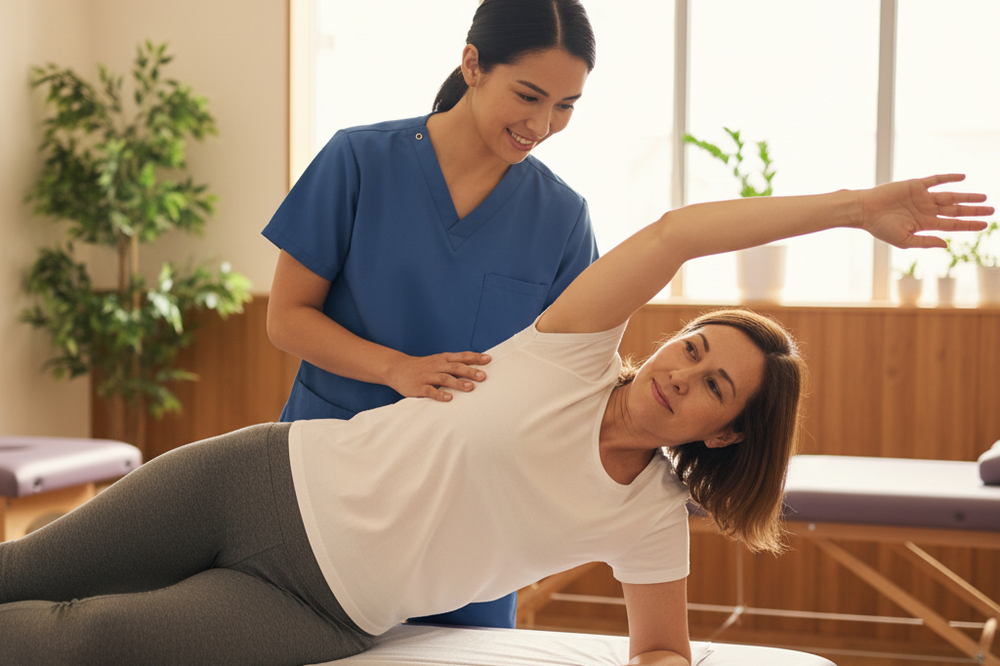
Some patients benefit from gentle hands-on treatment to address muscle tension, improve comfort, and make movement feel easier. Depending on your presentation, treatment may include soft tissue work, positioning strategies, or gentle manual techniques that fit the stage of pregnancy.
Therapeutic Exercise
Exercise is usually a core part of treatment, but it should be specific to you. That may include breathing strategies, core and hip support work, pelvic floor coordination, graded strengthening, and movement retraining. The aim is to improve support around the pelvis without flaring symptoms.
Education and Activity Modification
Education matters because small changes in movement and daily routine can make a real difference. Practical strategies that may help include:
Movement Modifications:
- Take smaller steps when walking
- Avoid stepping into high spaces
- Minimize single-leg activities (like standing on one leg to put on pants)
- Keep legs closer together when getting in and out of bed
- Move as a unit, keeping knees together when changing positions
Positioning Strategies:
- Sleep with a pillow between your knees to support pelvic alignment
- Take regular breaks from sitting
- Avoid prolonged standing when possible
- Use proper body mechanics when lifting or carrying
Pelvic Support:
- A maternity support belt may help some people feel more supported during walking or standing
For more information about preparing your body for birth, read our post on preparing for birth and how pelvic physiotherapy can support a smoother delivery. You can also learn more about our pregnancy and postpartum physiotherapy services.
Pain Management Options
While physiotherapy works on movement, load management, and symptom reduction, a few simple self-management strategies may also help:
- Ice or heat, if one feels better than the other
- Short, regular movement breaks instead of pushing through longer aggravating tasks
- Supportive positioning in bed, on the couch, or while getting dressed
- Staying active within tolerable limits rather than stopping all movement
If pain is significant or changing quickly, speak with your pregnancy care provider about the safest next steps for you.
What About Labour and Delivery?
Many people worry about how pelvic girdle pain will affect labour and delivery. In many cases, it does not prevent a vaginal birth. What matters most is that your care team understands which positions and movements are most comfortable for you.
Discussing pelvic girdle pain with your birth team ahead of time can help you plan for position changes, mobility support, and ways to reduce unnecessary strain during labour.
Recovery After Birth
For many people, pregnancy-related pelvic girdle pain improves after delivery. Still, some symptoms can continue into the postpartum period, especially if movement patterns, weakness, or pain sensitivity have built up over time.
If you are still having pelvic pain after birth, follow-up care can help you return to walking, lifting, exercise, and daily tasks more comfortably. Our post on what to expect from pelvic floor recovery after birth offers more guidance.
When to Seek Help
You do not need to wait until pain becomes severe to seek physiotherapy. Early assessment may help you stay more comfortable and active during pregnancy, and many women find it easier to manage symptoms when they address them sooner.
Consider booking an assessment if you experience:
- Pain in your pelvis, hips, groin, or lower back during pregnancy
- Difficulty with stairs, walking, or rolling in bed
- Clicking or grinding sensations in your pelvis
- Pain that interferes with daily activities or sleep
- Concerns about how PGP might affect labour or delivery
At Burlington Pelvic Physiotherapy, you don't need a referral to see us. As primary care providers in Ontario, we can assess and treat pelvic girdle pain directly. Learn more in our post about whether you need a referral for pelvic floor physiotherapy in Ontario.
For additional information about recognizing pelvic floor dysfunction, read our article on warning signs your pelvic floor may not be working properly.
A Biopsychosocial Approach
Good care for pelvic girdle pain is not just about joints and muscles. It also means considering sleep, stress, work demands, parenting demands, exercise goals, and confidence in movement. A treatment plan should fit real life, not just a clinic table.
Moving Forward
Pelvic girdle pain is more than just growing pains. It is a specific pregnancy-related condition, and support is available. You do not have to accept severe pain as something you simply have to push through.
Symptoms can also vary from day to day. Some people feel relatively comfortable one day and much more limited the next, especially after poor sleep, more walking, or a busier day.
With appropriate physiotherapy care, many people find they can move with less pain, better confidence, and more control during pregnancy. Assessment, education, and individualized treatment can make day-to-day life feel more manageable.
Educational Disclaimer: This content is for educational purposes and does not replace professional medical advice. Always consult with your healthcare provider about your specific symptoms and treatment options.
Get Support in Burlington
If walking, stairs, turning in bed, or getting dressed are becoming harder because of pelvic pain, an assessment can help you understand what is driving your symptoms and what to change first. Our clinic is located at 960 Cumberland Ave, Burlington, ON L7N 3J6.
Ready to get support for pelvic girdle pain during pregnancy? Book your appointment or call 905-635-5711.
Reviewed by: Juhi Israni, Pelvic Health Physiotherapist